
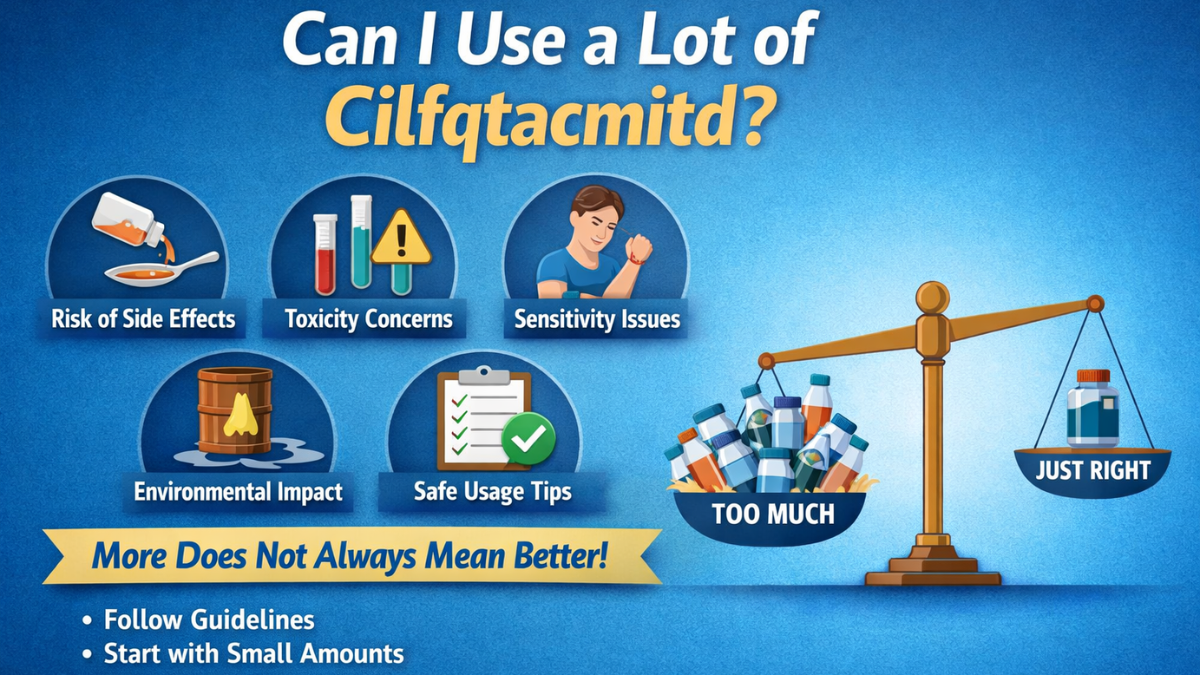
Can I Use a Lot of Cilfqtacmitd? A Complete Guide to Safe & Usage
In today’s world, new products and compounds often raise questions about proper usage, safety limits, and long-term effects. One such question people are asking is: can I use a lot of cilfqtacmitd? Whether cilfqtacmitd is a supplement, skincare formula, chemical compound, or specialty product, understanding how much is appropriate is essential for safety and effectiveness.
Using “a lot” of any substance without clear guidance can lead to unwanted results. This article explores what you need to consider before increasing your usage, the potential risks of overuse, the importance of dosage recommendations, and how to determine what amount is right for you.
Understanding Cilfqtacmitd
Before answering whether you can use a lot of cilfqtacmitd, it’s important to understand what it is and how it works. Every compound or product has a purpose, whether it is designed for health support, cosmetic enhancement, industrial use, or another function.
Typically, products are formulated with specific concentrations and recommended usage guidelines. These recommendations are based on testing, safety assessments, and expected outcomes. If cilfqtacmitd is intended for topical use, oral intake, or another specific method of application, the recommended quantity will vary accordingly.
The key point is that no product is designed for unlimited use. Even water, when consumed in excessive amounts, can cause harm. The same principle applies here.
What Does “A Lot” Really Mean?
When someone asks, “Can I use a lot of cilfqtacmitd?” the term “a lot” is subjective. For some people, it may mean doubling the recommended amount. For others, it may mean using it several times more than instructed.
Using more than recommended does not necessarily increase effectiveness. In many cases, it can reduce efficiency, cause irritation, or trigger side effects.
Understanding the difference between recommended usage and excessive use is crucial. Manufacturers and professionals provide dosage guidelines for a reason. These guidelines are typically based on:
Clinical or laboratory testing
Safety margins
Expected performance levels
Known side effects
Ignoring these recommendations can compromise both safety and results.
Why More Is Not Always Better
One of the most common misconceptions about products and compounds is that using more will produce faster or stronger results. In reality, this belief often leads to problems.
Here are several reasons why using a lot of cilfqtacmitd may not be beneficial:
1. Diminishing Returns
After a certain point, increasing the amount does not significantly improve results. The body or material surface may only absorb or respond to a limited quantity.
2. Increased Risk of Side Effects
Higher quantities can overwhelm your system or the treated area, potentially causing irritation, imbalance, or toxicity.
3. Waste of Product
Using more than necessary can be economically inefficient. You may be wasting product without gaining additional benefit.
4. Long-Term Consequences
Chronic overuse may lead to long-term complications that would not occur with proper use.
Potential Risks of Overusing Cilfqtacmitd
If you are considering using a lot of cilfqtacmitd, it’s important to evaluate possible risks. These risks will depend on the nature of the product, but common concerns include:
Physical Reactions
If cilfqtacmitd is used on the body or consumed, excessive use may cause reactions such as irritation, inflammation, digestive upset, or allergic responses.
Toxicity Concerns
Some compounds have safe upper limits. Exceeding those limits may stress organs such as the liver or kidneys, especially with prolonged use.
Sensitivity Development
Overuse may cause your body to become less responsive over time, requiring higher amounts to achieve the same result. This cycle can lead to dependency or resistance.
Environmental Impact
If cilfqtacmitd is an industrial or household product, excessive use may contribute to environmental harm or waste buildup.
When Higher Usage Might Be Justified
There are situations where increasing usage could be appropriate—but only under professional guidance.
For example:
A medical professional may adjust dosage based on body weight or condition severity.
A dermatologist may recommend a higher concentration for specific skin conditions.
An industrial specialist may alter quantities based on material scale.
However, self-adjusting without guidance can be risky. Any increase should be informed by reliable data or professional advice.
How to Determine the Right Amount
Instead of asking, “Can I use a lot of cilfqtacmitd?” a better question might be, “What is the correct amount for my needs?”
Here are practical steps to determine safe usage:
1. Follow Official Guidelines
Start with the manufacturer’s instructions or official documentation.
2. Consider Your Personal Factors
Age, health condition, sensitivity, and intended purpose all matter.
3. Start Small
If unsure, begin with the minimum recommended amount and observe results before increasing.
4. Monitor Reactions
Pay attention to any changes, positive or negative. If side effects occur, reduce usage immediately.
5. Consult a Professional
If cilfqtacmitd is medical or health-related, consult a qualified expert before making changes.
Signs You May Be Using Too Much
Recognizing early warning signs can prevent larger issues. Watch for:
Unusual irritation or discomfort
Strong or persistent reactions
No added benefit despite increased use
Dependency on higher quantities for the same effect
If any of these signs appear, it is wise to reduce usage and reassess.
Balancing Effectiveness and Safety
The ideal approach to using cilfqtacmitd is balance. Effective use lies within the range that achieves desired results without causing harm.
Think of it like seasoning food. Too little may not create impact, but too much can ruin the entire dish. The correct amount enhances performance without overwhelming the system.
Long-term safety should always be prioritized over short-term gains.
Psychological Factors Behind Overuse
Sometimes the desire to use “a lot” of something comes from impatience or fear that the recommended amount is insufficient.
Common psychological reasons include:
Wanting faster results
Believing more equals stronger
Fear of missing out on full benefits
Lack of trust in recommended limits
Understanding these motivations can help you make rational decisions rather than impulsive ones.
The Importance of Moderation
Moderation is a fundamental principle in health, wellness, and product use. Using the right amount consistently is usually more effective than using excessive amounts occasionally.
Consistency allows your body or environment to adapt appropriately. Sudden spikes in usage can disrupt equilibrium and cause setbacks.
Moderation also supports sustainability, both financially and environmentally.
Final Thoughts: Can I Use a Lot of Cilfqtacmitd?
So, can you use a lot of cilfqtacmitd?
In most cases, the answer is no, not without proper justification or professional guidance. More does not automatically mean better. Excessive use can reduce effectiveness, increase risks, and lead to unintended consequences.
The safest and smartest approach is to:
Follow recommended guidelines
Monitor your response
Adjust only when necessary
Seek professional advice when in doubt
Responsible use ensures that you receive maximum benefit while minimizing risk.
Frequently Asked Questions (FAQs)
1. Can I double the recommended amount of cilfqtacmitd?
Doubling the recommended amount is generally not advisable unless specifically instructed by a professional. Higher amounts may increase the risk of side effects without improving results.
2. What happens if I accidentally use too much?
The outcome depends on the type of product. Mild overuse may cause temporary irritation or discomfort. Severe overuse may require medical or professional attention. Always monitor your condition and seek help if symptoms appear.
3. Does using more make it work faster?
Not necessarily. Many products have a saturation point, meaning that after a certain level, additional use does not increase effectiveness.
4. Is it safe to use large amounts long-term?
Long-term excessive use can increase the risk of cumulative side effects. It is safer to stick within recommended limits unless supervised by a qualified expert.
5. How do I know the correct amount for me?
The correct amount depends on your purpose, health status, and sensitivity. Start with the recommended guidelines and adjust cautiously if needed, preferably under professional guidance.
6. Can tolerance develop if I use too much?
Yes, in some cases, overuse may reduce sensitivity or effectiveness over time, requiring higher amounts to achieve the same results. This is another reason to avoid excessive use.