

Bitplane: The Powerhouse Behind Advanced 3D and 4D Microscopy Imaging
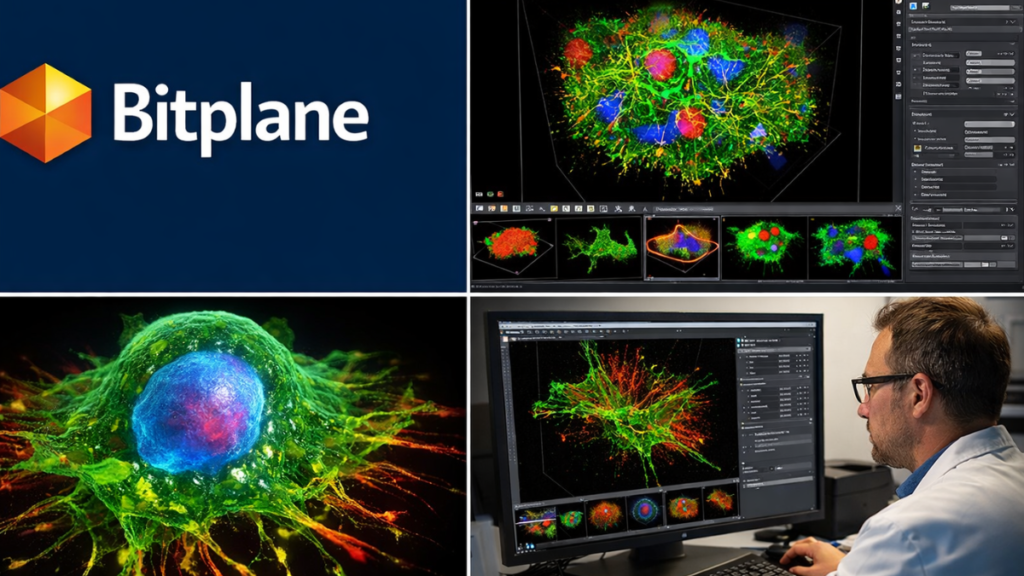
In the rapidly evolving world of scientific research, imaging technology plays a central role in discovery. From tracking cellular behavior to visualizing complex biological systems, researchers rely on high-performance software to interpret massive volumes of microscopy data. One name that stands out in this field is Bitplane.
Bitplane is widely known for developing advanced visualization and analysis software for 3D and 4D microscopy data. Its flagship product, Imaris, has become a global standard for researchers working in life sciences, neuroscience, cell biology, developmental biology, and medical research. With powerful tools for rendering, tracking, segmentation, and quantification, Bitplane has revolutionized the way scientists view and interpret complex image datasets.
This article explores what Bitplane is, how it works, its key products, benefits, applications, and why it remains a trusted solution in scientific imaging.
The History and Background of Bitplane
Over time, Bitplane gained recognition for its innovation in 3D and 4D image visualization. Eventually, the company became part of Oxford Instruments, a leading provider of scientific tools and solutions. This integration allowed Bitplane to expand its technological reach while maintaining its reputation for excellence in imaging software.
Today, Bitplane’s products are used in academic institutions, pharmaceutical companies, biotechnology labs, and research centers around the world.
What Is Imaris?
At the heart of Bitplane’s success is Imaris, its flagship software platform. Imaris is designed to transform microscopy image data into visually compelling and scientifically meaningful 3D and 4D models.
Key Capabilities of Imaris
3D Visualization
Imaris converts stacks of 2D microscopy images into interactive 3D reconstructions. Scientists can rotate, zoom, and slice through data to explore biological structures from every angle.4D Time-Lapse Analysis
In addition to 3D imaging, Imaris supports time-based analysis (the fourth dimension), enabling researchers to observe dynamic processes such as cell division, migration, and intracellular transport over time.Automated Segmentation
The software identifies and isolates cells, nuclei, filaments, and other structures automatically using advanced algorithms.Object Tracking
Imaris can track moving objects across time series data, making it invaluable in live-cell imaging studies.Quantification Tools
Scientists can measure volume, intensity, distance, area, and many other parameters to support statistical analysis.
Why Bitplane Is Important in Scientific Research
Modern microscopy techniques such as confocal microscopy, light-sheet microscopy, and super-resolution imaging generate enormous datasets. Without powerful analytical tools, extracting meaningful insights from this data would be nearly impossible.
Bitplane addresses this challenge by:
Handling very large datasets efficiently
Providing user-friendly interfaces
Offering reproducible and reliable quantification
Supporting integration with other scientific workflows
By bridging the gap between raw image data and publishable research findings, Bitplane plays a crucial role in scientific discovery.
Applications of Bitplane Software
Bitplane’s solutions are used in multiple scientific domains. Let’s explore some key application areas.
1. Neuroscience
In neuroscience research, understanding brain structure and neural connectivity is essential. Imaris allows researchers to reconstruct neurons in 3D, analyze dendritic spines, and map neural networks.
By providing filament tracing tools, the software helps scientists visualize complex neuronal architectures with precision.
2. Cell Biology
Cell biologists frequently study cell morphology, division, and intracellular interactions. With Imaris, researchers can segment nuclei, analyze organelles, and quantify protein expression levels.
Time-lapse capabilities also allow scientists to track cell migration and behavior in real time.
3. Cancer Research
Cancer research often involves analyzing tumor growth, metastasis, and drug response. Bitplane software enables 3D tumor spheroid analysis and detailed quantification of cell proliferation and apoptosis.
Researchers can assess how cancer cells respond to treatment by measuring structural and functional changes over time.
4. Developmental Biology
During embryonic development studies, scientists observe dynamic structural changes. Imaris provides time-series analysis tools that capture developmental processes at cellular resolution.
This helps researchers understand morphogenesis and tissue formation.
5. Pharmaceutical and Biotechnology Research
Pharmaceutical companies use Bitplane tools for drug discovery and screening. High-throughput imaging combined with automated analysis allows rapid and accurate assessment of drug effects on cells.
Key Features That Make Bitplane Stand Out
Advanced Rendering Engine
The software provides real-time rendering of large datasets. This ensures smooth navigation even with gigabyte- or terabyte-scale image files.
Machine Learning Integration
Modern versions include AI-powered segmentation tools that improve object detection accuracy. This reduces manual effort and enhances reproducibility.
Customization and Extensions
Imaris offers plugins and extensions that allow researchers to tailor workflows according to specific experimental needs.
Collaboration Support
Data can be exported for presentations, publications, or shared with collaborators across institutions. Clear visualizations enhance communication of complex results.
How Bitplane Supports Reproducible Science
Reproducibility is a major concern in modern research. Manual image analysis can introduce bias or inconsistency. Bitplane addresses this by:
Automating object detection
Providing standardized measurement tools
Allowing saved workflows and batch processing
Generating detailed analysis reports
These features ensure consistent results across experiments and laboratories.
Benefits for Researchers and Institutions
Using Bitplane software provides several practical advantages:
Time Efficiency – Automated tools significantly reduce analysis time.
Accuracy – Advanced algorithms minimize user errors.
Data Integrity – High-quality rendering preserves raw data fidelity.
Publication-Ready Visuals – Stunning 3D renderings enhance research papers and conference presentations.
Scalability – Suitable for both small research projects and large collaborative studies.
For universities and research institutions, investing in professional imaging software improves both research output and competitiveness.
Comparison with Other Imaging Software
While several image analysis platforms exist, Bitplane’s Imaris stands out for:
Superior 3D and 4D rendering performance
Specialized neuroscience filament tracing tools
Intuitive user interface
Robust support and documentation
Open-source alternatives like ImageJ provide valuable functionality, but Imaris often delivers higher performance and advanced visualization capabilities for complex datasets.
The Future of Bitplane
As microscopy technology continues evolving, imaging software must adapt. Trends shaping Bitplane’s future include:
Greater integration of artificial intelligence
Cloud-based data processing
Enhanced support for ultra-large datasets
Improved collaboration tools
Automation for high-content screening
With increasing data complexity in life sciences, software platforms like Imaris will remain essential in bridging imaging hardware and scientific insight.
Challenges in Multidimensional Imaging
Although Bitplane offers powerful solutions, multidimensional imaging still presents challenges:
Managing extremely large file sizes
Requiring high-performance computing systems
Learning curves for advanced features
High licensing costs for institutions
Despite these challenges, the value delivered in research efficiency and data quality often outweighs the investment.
How to Get Started with Bitplane
Researchers typically gain access through institutional licenses or direct purchase. Training resources, tutorials, and support materials help new users master the software.
Many universities include Imaris in their core imaging facilities, allowing students and scientists to learn under expert guidance.
Frequently Asked Questions (FAQs)
1. What is Bitplane known for?
Bitplane is known for developing advanced 3D and 4D microscopy visualization and analysis software, especially Imaris.
2. What type of research uses Imaris?
Imaris is widely used in neuroscience, cell biology, cancer research, developmental biology, and pharmaceutical research.
3. Is Bitplane software suitable for beginners?
Yes, the software includes user-friendly interfaces and tutorials, although advanced features may require training.
4. Can Imaris handle large datasets?
Yes, it is specifically designed to handle large multidimensional datasets efficiently.
5. Does Bitplane support time-lapse imaging?
Absolutely. Imaris supports 4D time-lapse imaging and object tracking across time.
6. Is Bitplane part of another company?
Yes, Bitplane operates under Oxford Instruments, a global scientific equipment provider.
7. Can results from Imaris be published?
Yes, the software generates high-quality visualizations suitable for research publications and conferences.
8. Does it include AI-based analysis?
Modern versions integrate machine learning tools for improved segmentation and automation.
Conclusion
Bitplane has established itself as a leader in multidimensional microscopy visualization and analysis. Through its powerful Imaris software, researchers can transform raw imaging data into meaningful scientific insights. From neuroscience to cancer research, the platform empowers scientists to explore complex biological systems in unprecedented detail.
As imaging technologies continue to evolve, Bitplane’s innovation ensures that researchers remain equipped with the tools necessary to unlock the mysteries of life at microscopic levels. With a strong focus on visualization quality, automation, reproducibility, and advanced analytics, Bitplane remains a cornerstone in modern scientific imaging.