
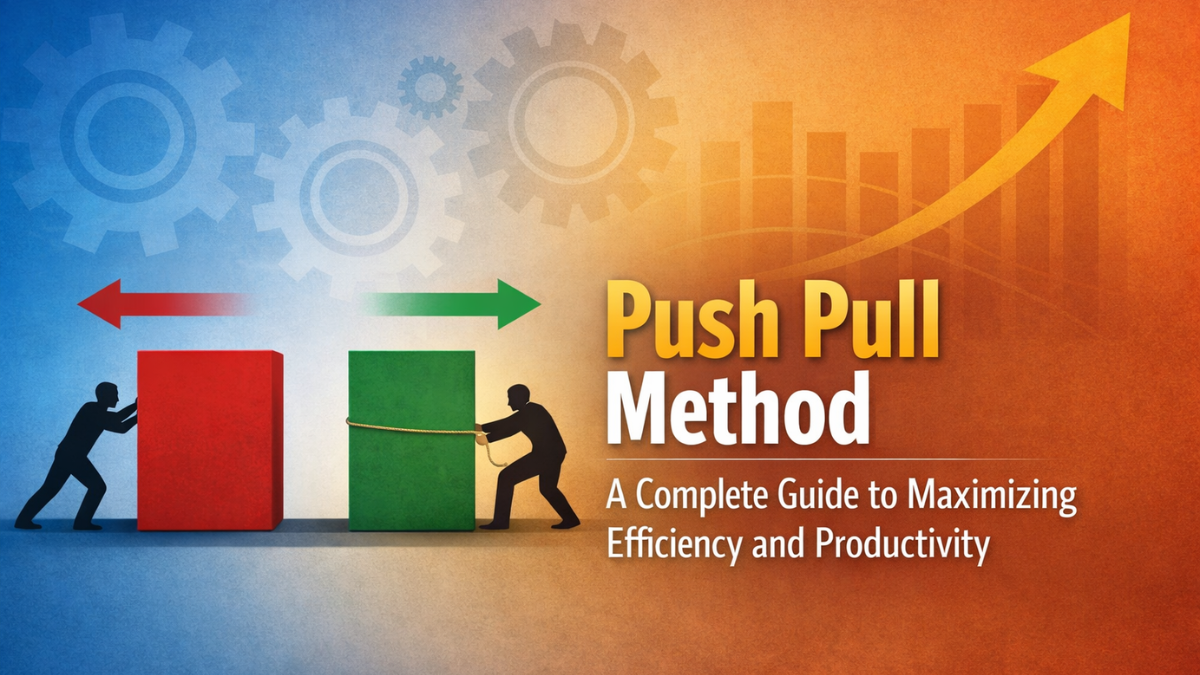
Push Pull Method: A Complete Guide to Maximizing Efficiency and Productivity
The push pull method is a powerful concept used in various fields, including fitness, manufacturing, logistics, and even personal productivity. At its core, the push pull method revolves around two opposing yet complementary forces—pushing and pulling—to create balance, efficiency, and better results.
Whether you’re organizing your workout routine, improving business processes, or managing tasks effectively, understanding it can significantly enhance your performance. In this article, we will explore it in detail, its applications, benefits, and how you can implement it in different areas of life.
What Is the Push Pull Method?
The push pull method is a system that categorizes actions or processes into two types:
Push: Activities where force is applied to move something away from you.
Pull: Activities where force is used to bring something toward you.
This simple concept can be applied in multiple contexts:
In fitness, it refers to exercises that involve pushing or pulling movements.
In supply chain management, it describes production strategies.
In productivity, it relates to how tasks are handled and completed.
The method works best when both push and pull actions are balanced properly.
Push Pull Method in Fitness
One of the most popular uses of the push pull method is in workout routines. It helps organize exercises based on muscle movement patterns.
Push Exercises
Push exercises target muscles that contract when pushing weight away from the body. These typically include:
Chest muscles
Shoulders
Triceps
Examples of push exercises:
Bench press
Shoulder press
Push-ups
Tricep dips
Pull Exercises
Pull exercises focus on muscles used to pull weight toward the body. These include:
Back muscles
Biceps
Examples of pull exercises:
Pull-ups
Deadlifts
Rows
Bicep curls
Benefits of Push Pull Workout Split
Using it in fitness offers several advantages:
1. Better Muscle Recovery
By separating push and pull days, you allow muscle groups to recover properly. This reduces fatigue and improves overall performance.
2. Balanced Muscle Development
The method ensures that opposing muscle groups are trained equally, preventing imbalances.
3. Improved Workout Efficiency
Grouping similar movements together helps you stay focused and makes your workout sessions more structured.
4. Flexibility in Scheduling
You can easily create a routine such as:
Day 1: Push
Day 2: Pull
Day 3: Rest
Push Pull Legs Variation
A more advanced version of it is the Push Pull Legs (PPL) routine.
Structure:
Push Day: Chest, shoulders, triceps
Pull Day: Back, biceps
Leg Day: Lower body
This variation allows for more targeted training and is widely used by intermediate and advanced fitness enthusiasts.
Push Pull Method in Manufacturing
It is also widely used in manufacturing and supply chain management.
Push System
In a push system:
Products are manufactured based on forecasts.
Items are “pushed” into the market regardless of demand.
Advantages:
Helps maintain inventory
Suitable for predictable demand
Disadvantages:
Risk of overproduction
Higher storage costs
Pull System
In a pull system:
Production is based on actual demand.
Products are made only when needed.
Advantages:
Reduces waste
Lower inventory costs
More efficient resource usage
Disadvantages:
Requires accurate demand tracking
Can lead to delays if demand spikes
Push vs Pull: Key Differences
| Feature | Push Method | Pull Method |
|---|---|---|
| Approach | Forecast-driven | Demand-driven |
| Inventory | High | Low |
| Risk | Overproduction | Stock shortages |
| Flexibility | Less flexible | Highly flexible |
Both systems have their place, and many industries use a hybrid approach.
Push Pull Method in Productivity
It can also improve personal productivity.
Push-Based Productivity
Push productivity involves:
Forcing yourself to complete tasks
Working based on schedules or deadlines
Example:
Completing assignments before a deadline
Following a strict timetable
Pull-Based Productivity
Pull productivity focuses on:
Working when tasks demand attention
Responding to priorities dynamically
Example:
Handling urgent emails
Solving problems as they arise
Combining Push and Pull for Best Results
The most effective strategy is combining both approaches.
Hybrid Approach
Use push for planned tasks
Use pull for urgent or real-time tasks
This balance ensures:
Better time management
Reduced stress
Higher productivity
How to Apply the Push Pull Method in Daily Life
You can implement it in simple ways:
1. In Work
Plan your day (push)
Handle urgent tasks (pull)
2. In Fitness
Follow a structured workout split
Allow proper recovery
3. In Business
Forecast demand
Adjust production based on real-time data
Common Mistakes to Avoid
While using it, avoid these errors:
1. Ignoring Balance
Focusing only on push or pull can lead to inefficiency or burnout.
2. Overloading Push Tasks
Too many scheduled tasks can cause stress and reduced productivity.
3. Lack of Flexibility
Not adapting to real-time needs can create delays or missed opportunities.
Who Should Use the Push Pull Method?
it is suitable for:
Fitness enthusiasts
Business owners
Students
Professionals
Anyone looking to improve efficiency and organization can benefit from this method.
Advantages of the Push Pull Method
Simple and easy to understand
Applicable across multiple fields
Improves efficiency and balance
Enhances productivity
Reduces waste and overwork
Limitations of the Push Pull Method
Requires planning and discipline
May not suit unpredictable environments alone
Needs proper balance to be effective
Conclusion
The push pull method is a versatile and effective strategy that can be applied in fitness, manufacturing, and everyday life. By understanding the difference between pushing and pulling actions, you can create a balanced approach that maximizes efficiency and minimizes waste.
Whether you’re planning your workouts, managing your time, or running a business, combining push and pull strategies will help you achieve better results. The key lies in balance—knowing when to push forward and when to pull back.
FAQs
1. What is the push pull method in simple terms?
The push pull method is a system that divides activities into pushing and pulling actions to improve efficiency and balance.
2. Is the push pull workout good for beginners?
Yes, beginners can benefit from it because it organizes workouts clearly and allows proper recovery.
3. How many days a week should I do push pull workouts?
You can follow a 3-day or 6-day routine depending on your fitness level and goals.
4. What is the difference between push and pull systems in business?
Push systems rely on forecasts, while pull systems depend on actual customer demand.
5. Can I combine push and pull methods?
Yes, combining both methods often gives the best results in fitness, productivity, and business.
6. Why is the push pull method important?
It helps create balance, improves efficiency, and reduces waste in various processes.
7. What is a push pull legs routine?
It is an advanced workout split that includes separate days for push, pull, and leg exercises.