
How Many Hours in a Week? A Complete Guide
Time is one of the most valuable resources we have, yet many people rarely stop to think about how it is structured. One of the most common questions people ask—especially when planning work, study, or personal schedules—is: how many hours in a week? While the answer may seem simple at first glance, understanding how those hours are distributed and used can have a significant impact on productivity and lifestyle.
In this article, we’ll explore the exact number of hours in a week, break it down into useful segments, and discuss how you can make the most of your time.
How Many Hours Are in a Week?
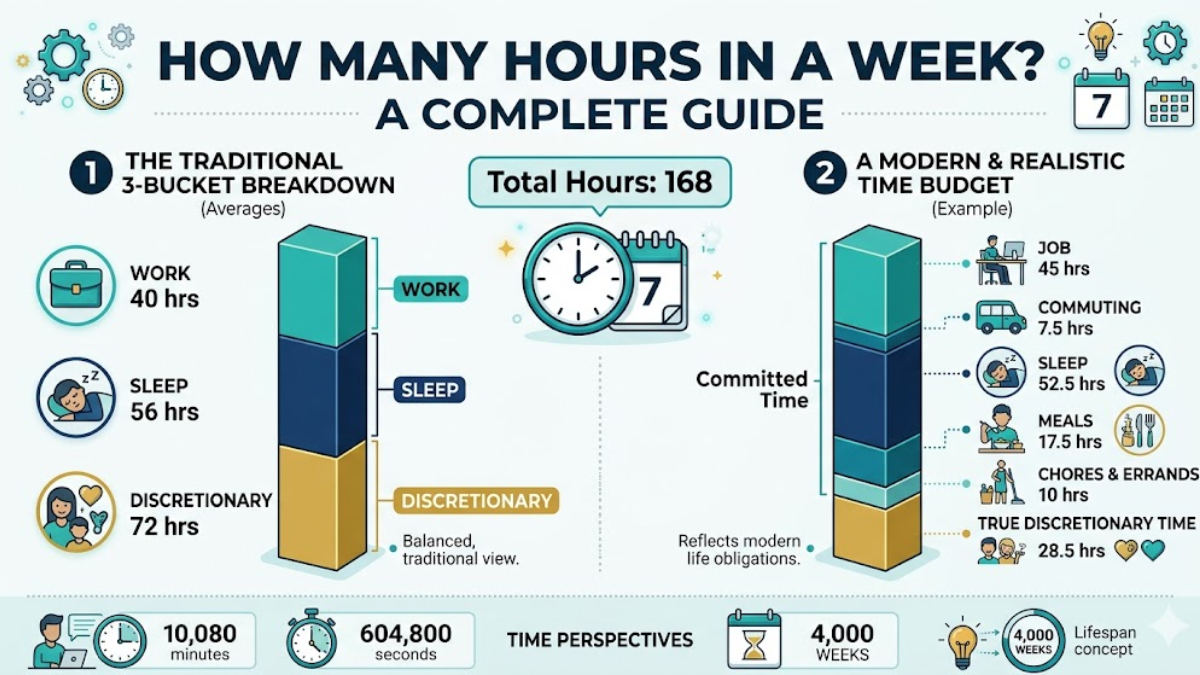
A standard week consists of 7 days, and each day has 24 hours. Therefore, the total number of hours in a week is:
7 × 24 = 168 hours
So, there are 168 hours in a week.
This number remains constant regardless of where you are in the world or what calendar you follow. Every week provides the same amount of time—it’s how you use those 168 hours that makes the difference.
Breaking Down the 168 Hours
Understanding how those 168 hours are typically spent can give you better insight into time management. Let’s divide the week into common life activities.
1. Sleep Time
Most adults need about 7–9 hours of sleep per night. Let’s assume an average of 8 hours per day:
- 8 hours × 7 days = 56 hours of sleep per week
That means roughly one-third of your week is spent sleeping.
2. Work or Study Time
For people working full-time:
- 8 hours per day × 5 days = 40 hours per week
Students may spend a similar amount of time on classes and studying.
3. Commuting Time
If you commute 1 hour daily:
- 1 hour × 5 days = 5 hours per week
This can vary widely depending on your lifestyle.
4. Personal Time
After subtracting sleep and work, you still have:
- 168 – (56 + 40 + 5) = 67 hours remaining
These hours are used for meals, exercise, family time, entertainment, and personal growth.
Why Understanding Weekly Hours Matters
Knowing how many hours are in a week isn’t just about basic math—it’s about awareness.
Better Time Management
When you understand your total available time, you can allocate it more effectively. Many people feel “busy,” but when they track their hours, they often find unused or wasted time.
Improved Productivity
Breaking your week into manageable chunks helps you stay focused. You can plan tasks more efficiently and avoid burnout.
Work-Life Balance
Recognizing how much time is spent on work versus personal life can help you adjust your schedule for a healthier balance.
Weekly Time Planning Strategies
Now that you know there are 168 hours in a week, here are some strategies to use them wisely.
1. Create a Weekly Schedule
Start by mapping out your fixed commitments like work, school, and sleep. Then fill in other activities.
2. Prioritize Tasks
Not all hours are equal. Identify your most productive hours and schedule important tasks during that time.
3. Use Time Blocks
Divide your day into blocks dedicated to specific tasks. This reduces distractions and improves efficiency.
4. Include Breaks
Don’t forget to schedule downtime. Rest is essential for maintaining energy and focus.
Comparing Weekly Hours Across Different Lifestyles
Different people use their 168 hours differently. Let’s look at a few examples.
Full-Time Employee
- Work: 40 hours
- Sleep: 56 hours
- Remaining: 72 hours
These remaining hours include commuting, social life, and personal care.
Student
- Classes: 20–30 hours
- Study: 10–20 hours
- Sleep: 56 hours
Students may have more flexible schedules but still need good time management.
Freelancer or Remote Worker
Freelancers often have flexible hours, but they may work more or less than 40 hours depending on workload.
The Concept of “Free Time”
Free time is often misunderstood. It’s not just the time left after work—it’s the time you consciously choose how to spend.
Out of 168 hours:
- 56 hours are spent sleeping
- 40 hours working
- Around 10–20 hours on daily chores
That leaves approximately 50–60 hours of free time per week, depending on your lifestyle.
This is a significant amount of time that can be used for hobbies, learning, or relaxation.
Common Time-Wasting Habits
Even though we have 168 hours each week, many people feel like they don’t have enough time. This is often due to poor habits.
Excessive Screen Time
Spending hours scrolling on social media can quickly eat into your free time.
Lack of Planning
Without a plan, time tends to slip away unnoticed.
Multitasking
Trying to do multiple things at once often reduces efficiency and increases the time needed to complete tasks.
How to Make the Most of 168 Hours
Here are some practical tips to maximize your weekly hours:
Set Clear Goals
Define what you want to achieve each week. This gives direction to your time.
Track Your Time
Keep a record of how you spend your hours. This helps identify areas for improvement.
Limit Distractions
Turn off unnecessary notifications and focus on one task at a time.
Maintain a Healthy Routine
Balanced sleep, exercise, and nutrition improve your energy and productivity.
Weekly Time vs. Monthly and Yearly Time
To put things into perspective:
- 1 week = 168 hours
- 1 month (approx.) = 720–744 hours
- 1 year = 8,760 hours
Understanding time at different scales can help with long-term planning and goal setting.
Cultural and Calendar Variations
While the number of hours in a week is always 168, different cultures may define the start and end of the week differently.
- In many countries, the week starts on Monday
- In others, it starts on Sunday
However, the total number of hours remains unchanged.
Fun Facts About Weekly Time
- The concept of a 7-day week dates back thousands of years
- The number 7 has historical and cultural significance in many civilizations
- Despite technological advancements, the structure of the week has remained consistent
Conclusion
So, how many hours in a week? The answer is simple: 168 hours. But what truly matters is how those hours are used.
By understanding how your time is distributed and making conscious choices about how you spend it, you can improve productivity, achieve your goals, and maintain a healthier work-life balance.
Every week gives you a fresh 168 hours—a new opportunity to plan, grow, and succeed.
FAQs
1. How many hours are in a week exactly?
There are exactly 168 hours in a standard week, calculated as 7 days multiplied by 24 hours.
2. How many waking hours are in a week?
If you sleep 8 hours per night (56 hours per week), you have about 112 waking hours.
3. How many work hours are in a week?
A typical full-time work schedule includes 40 hours per week, though this can vary.
4. How many hours are in a weekday?
Each day, including weekdays, has 24 hours.
5. How can I better manage my weekly hours?
You can manage your time better by creating a schedule, setting priorities, tracking your time, and reducing distractions.
6. Is 168 hours enough to achieve goals?
Yes, if used effectively. Proper planning and discipline can help you accomplish a lot within those 168 hours.