How to Optimize Your Study Environment for Peak Performance
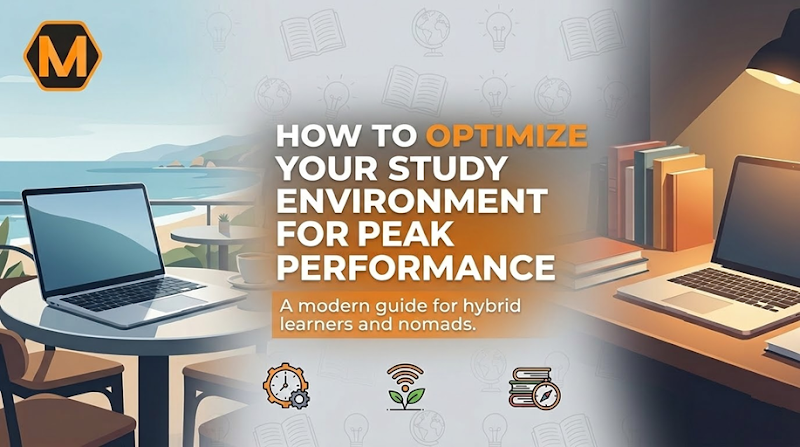
The traditional image of a student hunched over a wooden desk in a silent library is fading fast. In 2026, the “classroom” is wherever you open your laptop. Whether you’re sipping a latte in a bustling coastal café as a digital nomad or finding sanctuary in the hushed corners of a university archive, your environment dictates your results. But here is the reality: not every “aesthetic” workspace is actually productive. Choosing between a nomadic lifestyle and a fixed study spot isn’t just about the view; it’s about understanding how your brain processes information under different sensory loads.
For many undergraduates, the pressure to balance this lifestyle with soaring academic expectations is a constant battle. When the “nomad” life gets too chaotic or the library becomes too draining, many students find that professional MyAssignmentHelp Services through assignment help online acts as a necessary safety net. This allows them to focus on mastering their environment without falling behind on complex modules. Achieving peak performance requires a blend of the right physical space and the wisdom to know when to delegate the heavy lifting of research and formatting.
The Psychology of Space: Why Environment Matters
Our brains are wired to associate specific locations with specific behaviors. This is known as “context-dependent learning.” If you study in bed, your brain gets confused—is it time to sleep or time to analyze a case study? By creating a dedicated study zone, you trigger a psychological “on-switch” for focus.
- The Library Advantage: High accountability. Seeing others work hard triggers social facilitation, making you more likely to stay on task.
- The Nomad Advantage: Novelty. New environments can spark dopamine, which aids creativity and problem-solving.
Comparing Study Environments: At a Glance
| Feature | Library Dweller | Digital Nomad |
| Noise Level | Controlled Silence | Unpredictable / Ambient |
| Reliability | High (Stable Wi-Fi/Power) | Variable (Hotspots/Battery) |
| Social Interaction | Low to Moderate | High |
| Cost | Free (University Funded) | Moderate (Coffee/Travel) |
| Focus Type | Deep Work / Analytical | Creative / Brainstorming |

Designing Your “Deep Work” Sanctuary
Regardless of where you sit, certain “non-negotiables” define a high-performance workspace. Undergraduate life is a marathon, and poor ergonomics or bad lighting will lead to burnout before finals week even arrives.
Lighting and Visual Stimuli
Natural light is your best friend. It regulates your circadian rhythm, keeping you alert during the day and helping you sleep at night. If you are in a library, try to snag a seat near a window. If you are a nomad, choose cafes with glass fronts. Avoid “visual clutter”—a messy desk leads to a messy mind. Keep only what you need for the current task in your field of vision.
The Sound of Success
Some students thrive in total silence, while others need the “coffee shop hum” to focus. Research suggests that “Pink Noise” (which sounds like steady rain or wind) is often better for memory retention than the jarring lyrics of pop music. If you’re in a loud environment, noise-canceling headphones are an investment in your GPA.
Mastering the Technical Load: When Subjects Get Tough
It’s one thing to find a great cafe; it’s another thing to solve advanced calculus or statistical models while sitting there. Lifestyle shifts shouldn’t come at the cost of your grades. For instance, when tackling complex STEM modules, many students realize that a change of scenery isn’t enough to solve a triple integral. This is where specialized support from MyAssignmentHelp for mathematics assignment help becomes a game-changer. It ensures that while you are busy optimizing your lifestyle and traveling or working, the technical accuracy of your academic output remains top-tier.
Integrating this kind of support allows you to maintain the “Nomad” lifestyle without the “Nomad” stress of failing a quantitative course. It’s about working smarter, not just harder.
Digital Hygiene: Your Virtual Environment
Your physical desk is only half the battle. Your laptop screen is your “virtual” desk. If you have fifty tabs open, three chat apps pinging, and a YouTube video playing in the background, you aren’t “multitasking”—you are “switch-tasking,” which lowers your IQ by several points in the moment.
- Tab Management: Use browsers that allow you to group tabs by subject.
- Notification Blocker: Use “Do Not Disturb” modes during your 90-minute deep work blocks.
- Digital Minimalism: Keep your desktop wallpaper simple and your folders organized. Searching for a file for ten minutes is a flow-state killer.
The Hybrid Approach: The Best of Both Worlds
You don’t have to choose one identity. The most successful students in 2026 are “Hybrid Learners.” They use the library for intense, silent revision during exam season and utilize co-working spaces or cafes for group projects and creative essays.
- Monday–Wednesday (Deep Work): Library or quiet home office. Focus on heavy reading and technical assignments.
- Thursday–Friday (Collaborative/Creative): Cafes or outdoor spaces. Focus on emails, presentations, and networking.
Final Thoughts on Peak Performance
Optimization is a personal journey. What works for a design student might not work for a physics major. The key is to listen to your body and track your output. If you find yourself staring at the same page for an hour in a library, move. If you find yourself people-watching too much in a cafe, head back to the quiet zones. Use the tools available to you—whether that’s an ergonomic chair or professional academic assistance—to ensure your lifestyle supports your goals, rather than hindering them.
Frequently Asked Questions (FAQ)
1. Is it better to study in total silence?
Ans: Not necessarily. While “Deep Work” usually benefits from low distraction, some people find that “Ambient Noise” (around 70 decibels) actually enhances creative thinking compared to a silent room.
2. How often should I change my study environment?
Ans: Changing your location once every few days can prevent “mental stagnation.” However, don’t move so often that you spend more time “setting up” than actually studying.
3. Can I really rank on Google by writing about student lifestyle?
Ans: Yes. Google’s 2026 updates reward “Helpful Content” that provides real-world value. By addressing the actual problems students face—like environment optimization and technical subject stress—you satisfy search intent.
4. How do I manage technical subjects like Math while traveling?
Ans: Technical subjects require sustained concentration. If your environment is too chaotic, it’s best to use dedicated quiet hours or seek expert guidance to ensure your formulas and logic remain sound.
5. What is the “90-Minute Rule”?
Ans: The human brain generally can’t maintain peak focus for more than 90 minutes. Break your study sessions into these blocks, followed by a 15-minute “analog” break (no screens).
About The Author
Hello! I’m Kyle Bailey, a content strategist and academic consultant dedicated to helping students navigate the complexities of modern education. My work is centered on providing students with actionable insights into productivity, digital literacy, and study-life balance. As a lead contributor at MyAssignmentHelp, I specialize in creating high-quality, human-centric resources that help undergraduates manage heavy workloads while maintaining their mental well-being.