Why Garment Alterations Are the Secret to Better Bulk Clothing Production
Whenever people talk about the process of making clothes, they always tend to think of fabric selection, cutting, stitching, and finalizing. However, there is one more process which will decide the fate of an order and either turn it into a success or make it troublesome—alteration of garments.
For those firms which are ordering hundred or even thousands of garments, a small problem related to size can cause a lot of troubles such as complaints from customers, returning of goods, and extra expenses on rework.
Alterations Are Not Just Minor Adjustments
While for most individuals, alterations may involve the alteration of pants by shortening them or modifying the sleeves after acquiring the clothes, in mass production processes, this is not the case.
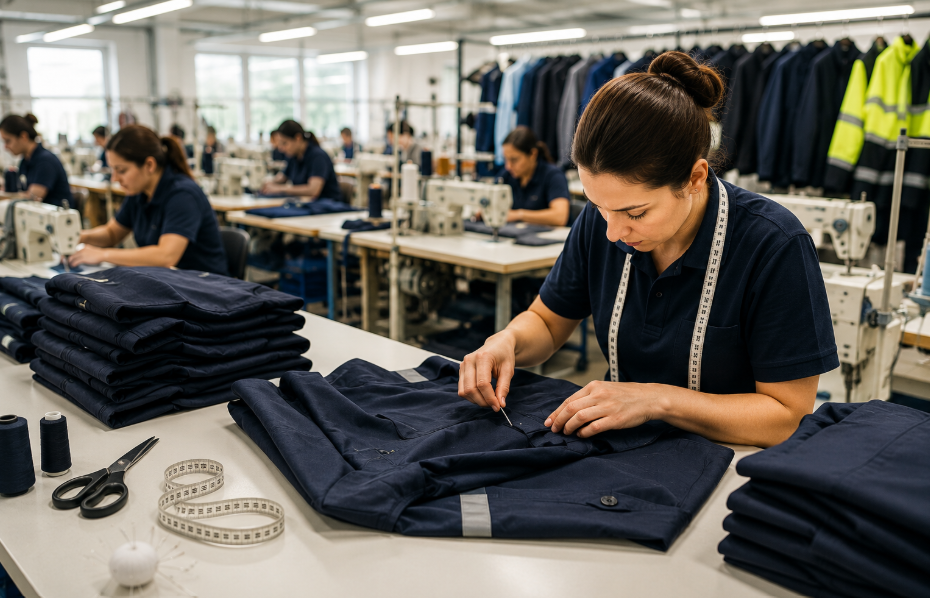
In bulk alterations, adjustments are done based on predetermined specifications that all the clothes must meet. Instead of modifying clothes on a one-off basis, the producers use pre-approved measurements.
In this way, business organizations can achieve consistency throughout.
The Importance of Consistency in Bulk Purchasing
Let us consider providing uniforms for an army of 500 workers. If one batch doesn’t fit as well as another batch, then this inconsistency becomes obvious quite soon.
Any discrepancies with the sleeve size, waist sizes, or any other garment measurements might not look important at the stage of production, but they certainly become obvious when workers start wearing this uniform.
Garment alteration services can help to get rid of such discrepancies and ensure that every piece of the product produced by your company has similar characteristics to other pieces of the same type.
Consistency is as important for trade buyers as the quality of the product itself.
Changes Work Better With Planning
A key mistake is to believe that changes must be made when there are issues to address.
In truth, the most effective companies plan their alterations as an integral part of their manufacturing process. Once samples are approved, all the necessary changes are identified and implemented throughout the manufacturing and finishing processes.
There are many benefits to planning ahead:
- Ensures consistent sizing for each piece of clothing
- Eliminates production delays
- Eliminates waste and rework
- Enhances quality control
- Completes orders faster
By avoiding mistakes, companies eliminate the need to fix them.
Alterations and Their Relationship to Clothing Manufacturing Services
Effective clothing manufacturing services require much more than just putting together pieces of clothing.
Some modern manufacturers offer a full range of manufacturing assistance such as:
- Product development
- Pattern making
- Samples
- Fabrication
- Bulk manufacturing
- Quality checks
- Clothing alterations
- Fulfillment
Providing all these services at once allows manufacturers to better control quality and reduce communication problems during various production processes.
Why Do Alterations Enhance the Process of Garment Manufacturing?
All steps in garment manufacturing play an important role in the end product.
Despite having all samples tested, behavior of the fabric might be different while manufacturing the garments in bulk. The slight variations in cuts, stitches, and grading may call for changes in order to make the garments uniform.
This is where the process of alterations becomes useful.
Rather than making alterations after the product reaches the buyers, manufacturers make specifications based alterations before the final inspection.
Quality Control is Inextricably Linked to Alterations
Alterations will only be successful if they are accompanied by quality control measures.
Prior to packaging of the clothing pieces for shipment, knowledgeable manufacturers measure their sizes, stitching, and overall appearance. These measures can ensure that all the alterations have been carried out properly and uniformly.
Such quality control allows for minimizing the chance of defective goods being shipped out and enhances the buyer’s trust in every order.
Building Long-Term Growth for Businesses
If a business handles repeat orders, then consistency plays a critical role.
The customers expect to get the same level of fitting and quality on each order they make. This is why a manufacturer who can provide accuracy in altering garments in multiple batches proves to be helpful.
This not only enhances customer satisfaction, but also fosters good business relations between the brands, distributors, and manufacturing companies.
Selecting the Right Manufacturing Partner
It is not necessary that all manufacturers provide an integrated system for altering their products.
In selecting clothing manufacturing partners, the following criteria need to be kept in mind by companies to ensure smooth and hassle-free operations:
- Bulk Alterations
- Consistency in Sizing
- Systems of Sample Approvals
- Quality Check Processes
- Integrated System of Alteration within the Production Process
- Packing and Fulfillment Assistance
Final Thoughts
The process of manufacturing clothing is not merely dependent on fabric and sewing skills alone. Consistency, quality assurance, and thorough planning are equally significant factors when providing garments that match consumer needs.
Garment alterations performed by professionals will ensure that each piece of clothing meets approved specifications. By incorporating alteration procedures together with clothing manufacturing services, the alteration process becomes an integral component of apparel manufacturing.
For companies that manufacture clothing products in bulk, hiring a manufacturer who incorporates garment alterations into the manufacturing process is not only a luxury but also a necessity.
Frequently Asked Questions
1. What are garment alterations in bulk manufacturing?
Garment alterations are planned size or fit adjustments applied consistently across a production run to ensure every garment matches approved specifications.
2. Why are garment alterations important?
They improve fit consistency, reduce product returns, minimise rework, and help maintain quality across large orders.
3. How do clothing manufacturing services support alterations?
Many clothing manufacturing services integrate alterations into sampling, production, finishing, and quality control, creating a smoother and more efficient workflow.
4. Can alterations be completed during clothing production?
Yes. The most efficient manufacturers build alterations directly into the clothing production process rather than treating them as post-production corrections.
5. What should businesses look for in a manufacturing partner?
Look for experience, quality control, integrated alteration services, scalable production capacity, and the ability to deliver consistent results across repeat orders.